


Can Safe Paw or Safe Thaw Damage Stone or Mortar? Understanding Porosity and Protection
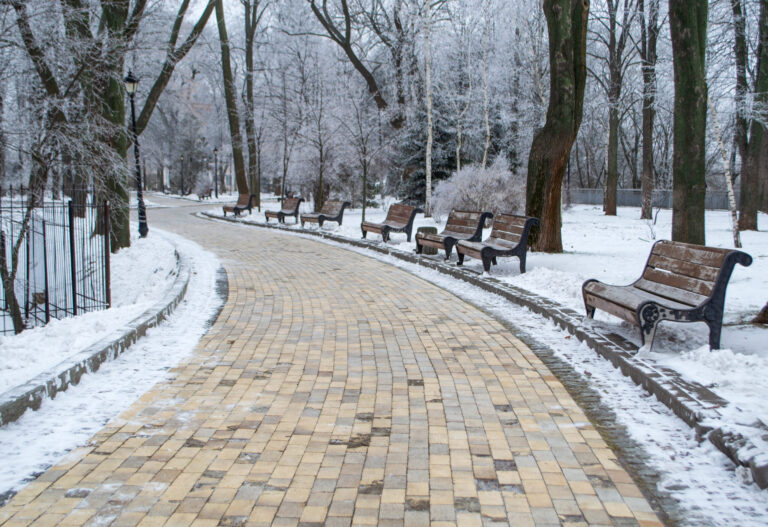
When winter hits, homeowners reach for deicers to keep steps, patios, and walkways safe. But what happens when those walkways are made of stone and mortar? A frequent concern is whether pet-safe deicers like Safe Paw or Safe Thaw might damage these materials. The answer lies not in the product—but in the material itself.
The Truth About Mortar and Porous Stone
Mortar is inherently very porous, which means it easily absorbs moisture. When snow or slush sits on unsealed mortar joints, water can seep in. If that water freezes, it expands. Over time, this expansion can cause spalling, cracking, or crumbling, even if the concrete or stone around it remains solid. This has more to do with water intrusion than the product applied on top.
As for stone, the outcome depends entirely on the type of stone used. Natural stones like limestone and sandstone are more porous and thus more vulnerable. Denser stones like granite or slate are far more resistant to moisture, and therefore, to freeze-thaw damage. But even in these cases, if the mortar between stones remains unsealed, it becomes the weakest point in the system.
Safe Paw and Safe Thaw: The Role They Play
Both Safe Paw and Safe Thaw are engineered to be chloride-free, non-corrosive, and pet-safe. Unlike rock salt or calcium chloride, which can chemically degrade surfaces and harm vegetation, these products are designed with safety in mind. They don’t burn skin or paws and don’t chemically attack stone or concrete.
However, when applied to unsealed porous materials, any deicer—no matter how safe—can indirectly contribute to moisture retention. The product itself does not harm the stone or mortar, but the moisture introduced or retained can. That’s why sealing is recommended as a precaution, not because the deicer is aggressive, but because porosity makes certain materials vulnerable to water damage.
Why Sealing Is Essential
Think of sealing as putting up a barrier. A high-quality, water-repellent sealant blocks moisture from penetrating into mortar joints or porous stone surfaces. This drastically reduces the risk of freeze-thaw damage in winter. Sealing should be part of your regular home maintenance routine—especially before ice season arrives.
Without sealing, even rain or melting snow—without any deicer involved—can penetrate and freeze, leading to structural or aesthetic problems. So it’s not about blaming the product. It’s about managing moisture properly.
Practical Winter Tips
If your stone path or patio is porous or mortar-rich:
- Seal it annually or biannually with a breathable, weatherproof sealant.
- Apply Safe Paw or Safe Thaw lightly and evenly. Overapplication isn’t necessary due to their high efficiency.
- Sweep away residue after melting to minimize any moisture pooling in surface cracks.
- Avoid allowing slush to accumulate along edges or crevices.
Conclusion: Seal First, Then Deice
Safe Paw and Safe Thaw don’t damage stone or mortar—but unsealed, porous materials can still suffer from winter’s freeze-thaw cycle. To prevent issues, proper sealing is key. Think of deicers as your safety layer, not your structural barrier. When paired with good home maintenance, these products keep your property safe for feet, paws, and materials alike—all without compromise.
Q1. Can Safe Paw damage natural stone walkways?
No, but unsealed porous stone may be vulnerable to moisture damage from freeze-thaw cycles.
Q2. Is mortar more sensitive to winter damage than concrete?
- Yes. Mortar is more porous and more susceptible to cracking unless properly sealed.
Q3. How often should I seal stone or mortar?
- At least once every 1–2 years, depending on exposure and traffic.
Q4. Are Safe Paw and Safe Thaw safe for all types of stone?
Yes, they’re safe for use on stone—but sealing is recommended for best results.
Q5. Can I use Safe Thaw on my stone patio if it hasn’t been sealed yet?
- You can, but it’s best to seal first to prevent potential moisture-related issues.